
Zuora Order to Revenue: Transforming Subscription Billing and Revenue Recognition

Shivani Sukhija, Practice Head – North America.
Our previous article introduced Zuora’s Order to Revenue (OTR) feature and its transformative potential for subscription businesses. Having implemented OTR across various industries, we share our insights and best practices to help organizations maximize the value of this powerful solution.
Success stories
Case Study 1: Fintech SaaS Provider
Challenge:
- Complex Subscription Models: The provider struggled with managing a mix of recurring subscriptions, term licenses, and usage-based pricing.
- Legacy System Data Migration: Integrating expense and revenue management data from disparate legacy systems created challenges in data consistency and accuracy.
- Managing Account Hierarchy: The company’s account and subscription data hierarchy, with multiple tiers of recurring charges and consumption roll up rules, made revenue recognition and reporting difficult.
Solution:
- Phased Migration Approach: A carefully planned migration strategy was implemented to minimize disruption and ensure a smooth transition to the new system.
- Custom Revenue Transaction Uploads: Tailored revenue Upload process was followed, and custom rules were developed to accurately capture the financial impact of various subscription models and account hierarchies for legacy and current data.
Case Study 2: Content Provider SaaS Company
Challenge:
- High Volume of Historical Data: They needed to migrate vast amounts of historical customers revenue data from the current system, for whom revenue reporting should continue to the ERP systems without any disruptions. Managing such a large volume of data posed risks to system performance and overall processing time.
- Complex Revenue Release Requirements: Their revenue recognition process involved delivery-based revenue recognition, independent of subscription service period and quantity, which makes automation difficult and prone to errors in calculations.
- Subscription Management use cases: The subscription orchestration cases and use case scenarios with specific cancellation and renewal relationships, made revenue recognition and reporting difficult.
Solution:
- Staged Data Migration: The historical data was migrated in phases to avoid disruptions. This allowed the team to validate data in smaller chunks, ensuring integrity at every stage and reducing operational risks.
- Custom Performance Optimization: Database queries, indexing, and caching mechanisms were optimized to improve performance. High performance additional processors were utilized with the help of the engineering team to maintain speed and accuracy of data transformation and sync to revenue systems.
- Pilot Conversion: To accelerate validation, polit conversion techniques were applied, to process all the data in a production capabilities environment with full data set. This helped identify all the issues and validate the data for production deployment.
How OTR Made a Difference:
- Automated Data Synchronization: Integrated billing and revenue systems automate data exchange, eliminating manual processes. This ensures seamless data consistency across platforms, improving efficiency and reducing errors.
- Streamlined Data Transformation and Validation: The source data is transformed in Billing system and can be easily reported for detection of missing data syncs. There are API based options to easily regenerate the transformed data from source system. This simplifies the migration process, reduces complexity, and accelerates data validation.
- Efficient Data Backfilling: OTR process has tools to backfill the historical data non- essential for revenue recognition. By minimizing unnecessary data, the system reduces data volumes, leading to faster migrations and improved accuracy.
- Migration Management during Pilot Conversion: The reporting, data query and reconciliation capabilities built within system make it easy to monitor the status of ongoing Migration during Pilot Conversion period.
Evolution of Revenue Management
Subscription businesses across industries face common challenges:
- Complex revenue recognition rules
- High volume of transactions
- Multi-currency and multi-entity scenarios
- Strict regulatory compliance requirements
OTR addresses these challenges by streamlining the integration between billing and revenue recognition processes.
Real-Time Data Integration: A Game-Changer for Order Management and Revenue Recognition
OTR’s real-time synchronization between billing and revenue systems represents a paradigm shift in revenue management. As the Billing system is already integrated with other Quote to Cash components, this provides a seamless end-to-end overview to organizations to orchestrate their order’s lifecycle. The revenue impact for all product offerings in an integrated system including Professional fees, recurring Platform fees, and Consumption Unbilled fees can be reported on the revenue dashboard and accessed by the Zuora Revenue Reports providing the business owners with a real-time view into the valuable financial Metrics data.
Traditional approaches often rely on batch processing, leading to delays and reconciliation challenges, with OTR:

- Instant Data Availability
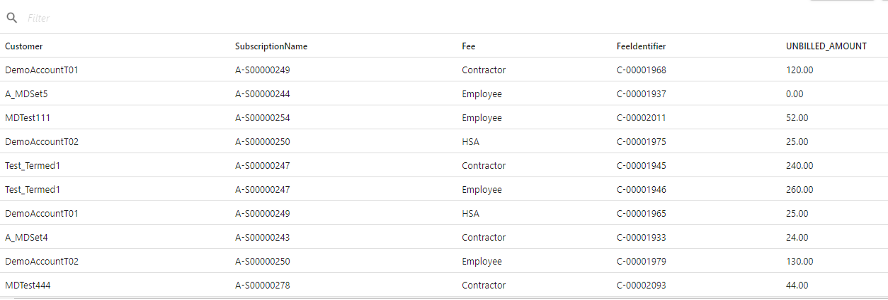
- Revenue data queries directly from Zuora Revenue within Zuora Billing
- Example of direct revenue query in Zuora billing system
- Revenue data queries directly from Zuora Revenue within Zuora Billing
rcld.customername as Customer, sub.Name as SubscriptionName,
rcld.itemnumber as Fee, rcld.salesordernumber as FeeIdentifier,
SUM(transactiondebitamount) AS UNBILLED_AMOUNT
FROM
revenuelive.REVENUECONTRACTACCOUNTINGENTRIES rcai
INNER JOIN revenuelive.REVENUECONTRACTLINESDIMENSIONS rcld
ON rcld.revenuecontractlineid = rcai.revenuecontractlineid
INNER JOIN rateplancharge rpc
ON rpc.ChargeNumber = rcld.salesordernumber
INNER JOIN subscription sub
ON rpc.subscriptionId = sub.id
WHERE unbilled_flag = ‘Y‘ and reversal_flag = ‘N‘
GROUP BY rcld.customername, sub.Name, rcld.itemnumber, rcld.salesordernumber
- Eliminates traditional data lag between systems
- Enables real-time decision making
- Usage-Based Revenue Recognition
- Real-time monitoring of consumption data
- Immediate recognition of usage-based unbilled revenue
- Accurate revenue forecasting based on current usage patterns
- Future-Ready Architecture
- Positioned for two-way synchronization of many data objects in future releases by utilizing REST API
Currently, there are other subscription billing systems with consumption capability, and Revenue systems that would provide consumption revenue processing capabilities.
However, none offer real-time revenue recognition for usage-based billing.
OTR’s Unique Capabilities
- Direct Data access through Data Query Integration and Report API access
- Near Real-Time Revenue Insights
- Revenue impact visible within minutes of usage events
- Enables proactive business decisions based on current data
- Automated Reconciliation
- Real-time matching between billing and revenue for usage records
- Elimination of manual reconciliation processes
Industry-Exclusive Features
Based on our research and implementation experience, Zuora OTR stands alone in offering:
- Sub-minute recognition of usage-based revenue
- Direct querying of revenue data within the billing system
- Automatic reconciliation between billing and revenue data
Next Steps
For organizations considering OTR implementation, we recommend:
- Conducting a readiness assessment
- Developing a phased implementation plan
- Engaging with experienced implementation partners
Best Practices for Implementation
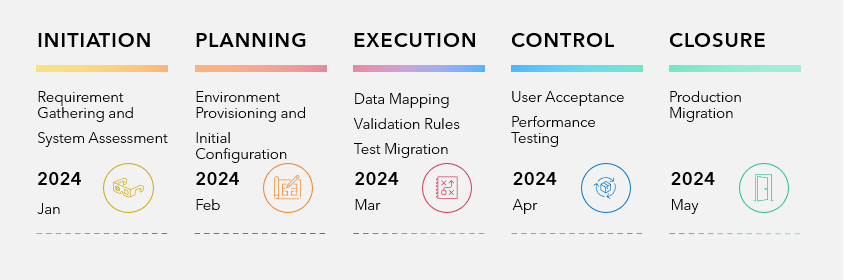
- Implementation Approach
- Create detailed data migration strategy, timeline and adapt design for OTR
- Change Management and Training
- Change Impact Assessment: Identify potential changes to roles, processes, and systems, and develop mitigation strategies.
- Stakeholder engagement across finance, operations, and IT
- Develop a clear and concise communication plan outlining the goals, timeline, and potential impacts of the project
- Role-based training programs: comprehensive training to all relevant stakeholders, including technical and business users
- Establishment of feedback mechanisms
- Environment Provisioning
- Work with Zuora Support for proper sizing
| Data Volume | Recommended Environment |
| < 1M transactions | Standard |
| 1M – 5M transactions | Enhanced |
| > 5M transactions | Custom sizing |
- Plan for adequate processing capacity
- Establish development and test environments
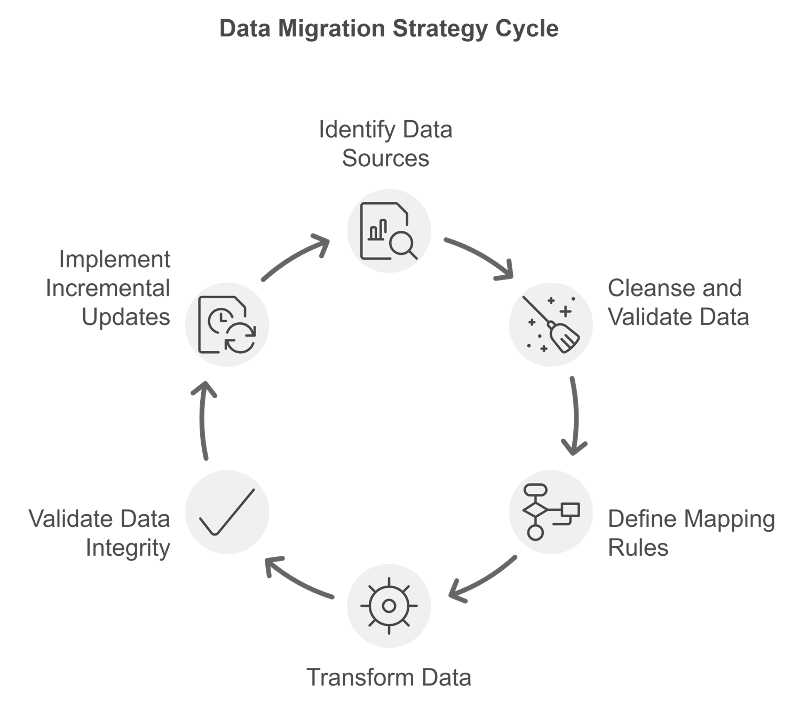
- Data Migration Strategy
- Validate existing solution implementation
- Develop comprehensive data mapping for different use cases and validate each scenario by performing extensive testing with OTR
-
- Plan for potential data backfilling scenarios to confirm the data volumes for migration for subscription and all the related objects including invoice, credit, and debit memos
- Work with the implementation partner and Zuora support to confirm the data volumes and data sets
- Processing Windows
- Plan for extended processing during initial migration based on historical data volumes
- Establish maintenance windows for large data syncs
- Consider Revenue Recognition Settings
- Custom Field Mapping
- Field Sync Configuration Path: Settings > Revenue Settings > Manage Revenue Fields Mapping > Custom Fields
- One-to-one mapping required:
- Zuora Billing object fields (source)
- Zuora Revenue fields (target)
- Template Updates
- Legacy requirement for custom fields in transaction templates eliminated. Direct field mapping is now sufficient
- Product Catalog Revenue Recognition field mapping:
- Revenue Recognition Accounting Codes
- Performance Obligation Mapping Rules
- Revenue Recognition Rule
- Product Sync to Revenue system exclusion to be setup based on specific scenarios
- Data Processing Considerations
- Credit Memo Handling
- Key Change: Invoice-linked manual credit memos processed as standalone CMs
- Reason: Prevents data collection errors due to insufficient invoice/SO balance
- Real-Time Sync Management
- Monitoring tools for sync status
- Error logging and resolution procedures
- Ongoing Support and Optimization
- Extended Hypercare
- Dedicated support during initial months post-implementation
- Regular health checks and performance monitoring
- Iterative optimization based on actual usage patterns
- Continuous Improvement
- Regular reviews of revenue recognition rules
- Performance tuning as transaction volumes grow
- Updates to accommodate new business models
- Technology Integration and Futureproofing
- Leveraging AI and Automation
- Predictive analytics for revenue forecasting
- Automated data reconciliation
- Implement workflow optimization: Automate routine tasks such as data entry, invoice generation, and reconciliation
- Scalability Considerations
- Planning for growth in transaction volumes
- Strategies for expanding into new markets or currencies
- Integration with evolving financial systems
- Custom Field Mapping
Measuring Implementation Success
We recommend tracking the following metrics to measure implementation success
Key Performance Indicators
- Operational Efficiency
- Time reduction in revenue recognition processes
- Decrease in manual interventions
- Improvement in period close cycles
- Data Quality
- Accuracy of revenue recognition
- Reduction in reconciliation discrepancies
- Compliance with revenue recognition standards
- Financial Impact
- Reallocation of resources to strategic activities
- Improved forecast accuracy
- Audit preparation efficiency
- Measure Return on Investment
- Companies can Calculate Savings by measuring Labor Cost, Error Cost, and Error in Reduction
- Reduction in revenue leakage can be measured by comprehensive and daily billing and booking reconciliation
Conclusion
Implementing Zuora revenue represents a significant opportunity for subscription-based businesses to streamline their financial operations. While the journey requires careful planning and execution, the potential benefits in terms of efficiency, accuracy, and scalability make it a worthwhile investment. Synthesis System implementation team’s experience has shown that with the right approach and expertise, organizations can successfully navigate this transformation and achieve meaningful improvements in their order-to-revenue processes. As the subscription economy continues to evolve, particularly in areas like consumption-based billing, our knowledge and experience positions us to help organizations navigate these changes successfully.